Synopsis
Treatment
This exhibit presents a postal history-based narrative of the NON-GANDHIAN armed struggle for Indian
independence, with a focus on the Indian National Army (INA) and the Indian Independence League (IIL)
operating in Japanese-Occupied Southeast Asia during World War II. It departs from the mainstream narrative
centered on non-violent resistance.
The treatment is chronological, beginning with a prologue (Frame 1) that traces the ideological roots of armed
resistance from the Revolt of 1857 through World War I, setting the stage for the resurgence of militant
nationalism during WWII. The gap between the two world wars was primarily dominated by Gandhian Non-
Violent movement which is out of scope of the following exhibit. The subsequent frames are organized around key historical
and military developments in Southeast Asia. This includes British Indian FPO operations in Southeast Asia,
censorship protocols, postal disruptions, and the unique systems developed under Japanese oversight for INA/IIL
communications.
The material selection emphasizes philatelically significant items such as rare campaign postmarks, wartime
censorships, INA censorship handstamps (the only recorded examples), IIL postal documents, and air-dropped
propaganda.
Interpretation of markings, reconstruction of mail routes, and identification of unofficial or provisional systems
are outcomes of original research undertaken by the exhibitor. The treatment ensures coherence and clarity while
incorporating historical depth, philatelic breadth, and social relevance in accordance with FIP Postal History
guidelines (Subclass 2C).
Importance
This exhibit explores diverse areas of postal history from 1857 through World War II, with emphasis on wartime communications avoiding any repetition. Highlights include:- Rare 19th century postal history including usages during the Indian Mutiny.
- Censored and campaign mail from World War I, including a rare surviving letter from a known revolutionary activist—originally directed (by postal authorities) for destruction in the Dead Letter Office.
- Postal service interruptions during World War II, featuring service suspensions, instructional markings, pre–Japanese Occupation censorship, and mail from British Indian postal contingents deployed in Southeast Asia.
- Postal documentation of Indian Independence League (IIL) activity, evidenced by distinctive handstamps used across multiple branches that exercised censorship privileges during the Japanese Occupation in Malaya and Burma.
- Lines of communications and mail disruptions during WW2.
- Mail systems from INA camps, detailing internal routing and censorship protocols within Japanese-Occupied territories. This exhibit displays the only recorded INA censorship handstamps.
- Innovations and adaptations in British-Indian Field Post Office (FPO) systems, including auxiliary markings, censorship controls, and special operational arrangements in active theaters.
- Wartime propaganda ephemera with defined philatelic relevance, including air-dropped leaflets and materials distributed through postal or semi-postal channels.
Knowledge and Research
- Curating and contextualizing diverse postal material to support the historical narrative.
- Documenting previously undocumented postal usages and communication systems.
- Developing a working census of Indian Independence League (IIL) and INA mails.
- Collaborating with international philatelic societies and researchers to validate findings.
Rarity
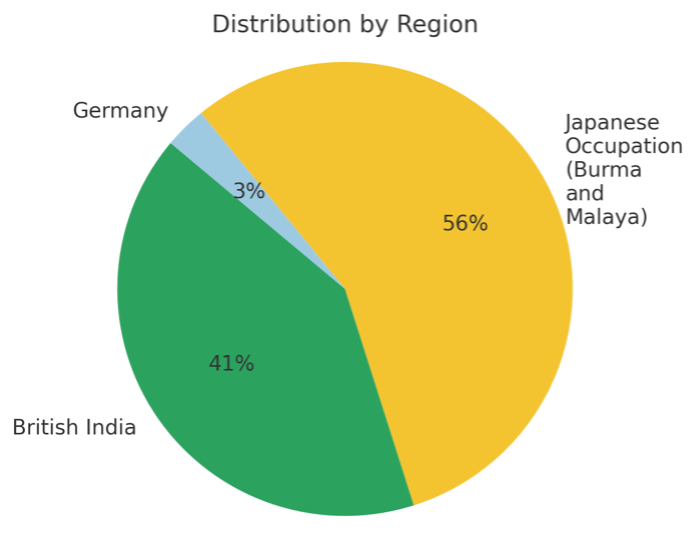
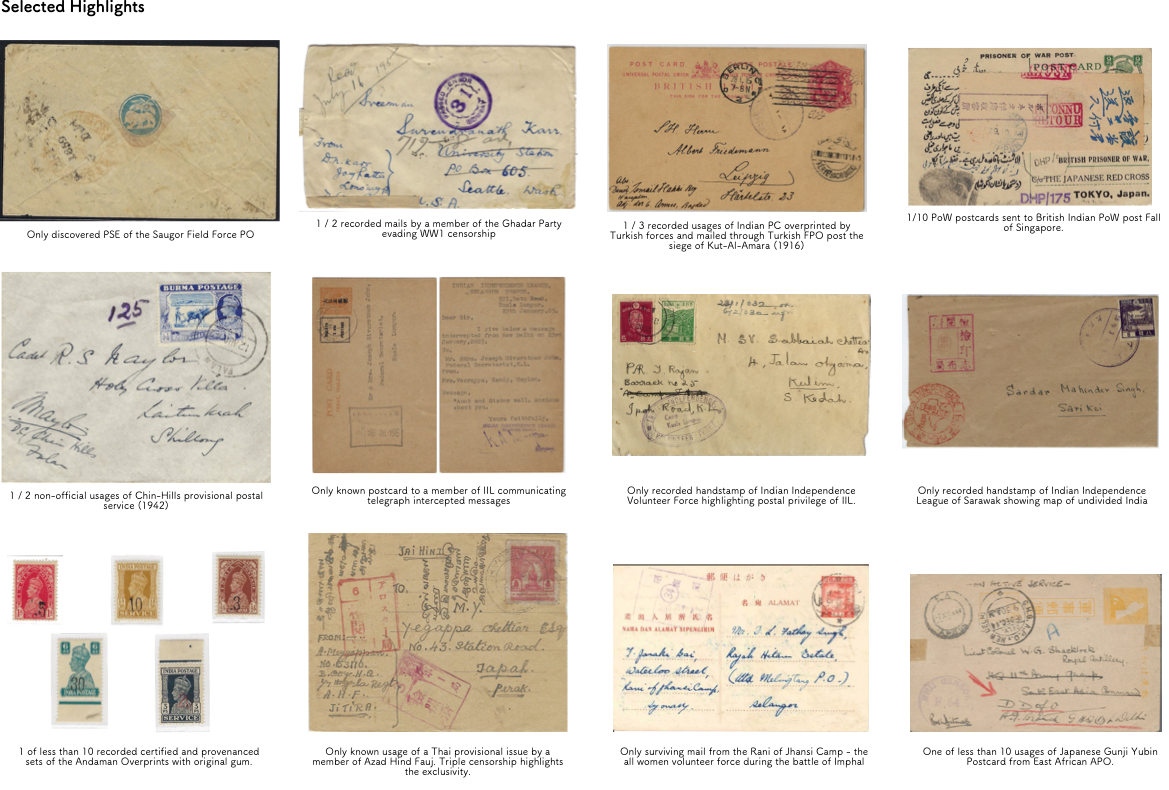
The postal history of Japanese Occupation (1942–1945) is brief yet complex, characterized by irregular stamp issues, overprints, and ad hoc systems with minimal documentation. Censorship was intense, especially around defected Indian soldiers suspected of espionage. This exhibit presents the most comprehensive collection of mail from a Provisional Government-in-exile, including the only known INA censorship handstamps on surviving Azad Hind courier mail. Additionally, upon reoccupation by the British, most of the materials were either destroyed or confiscated by the British Indian authorities (evidence provided on website). Built on nearly 50 years of research, it features several new discoveries and world-class rarities from renowned collections.
Improvements from previous iterations
The exhibit was awarded a
Acknowledgments
The author gratefully acknowledges his mentors who gave important feedback either as members of jury or consulted p rivately. Pat and Dan Walker, Dr. Peter McCann, Colin Fraser, Sam Chiu and Ken Nielsestuen. Additionally, several dealers and/or philatelists have painstakingly helped the exhibitor sometimes going through their enormous stocks to scan and share items for approval. David Wrigley, Michael Pugh and Mike White need special mention. Sandeep Jaiswal shared directed the exhibitor towards a few key items of Postal Stationery. Richard Warren has helped the exhibitor to track provenance of a few key items. Above all, the author is grateful to Jay Daschaudhuri, a fellow philatelist of forces postal history for his help on censorship during WW2 and strategic advice on key items that are rather obscure or lost in articles written in the past by eminent philatelists. Last but not least, the exhibitor acknowledges Subhanku Chatterjee's support and encouragement.